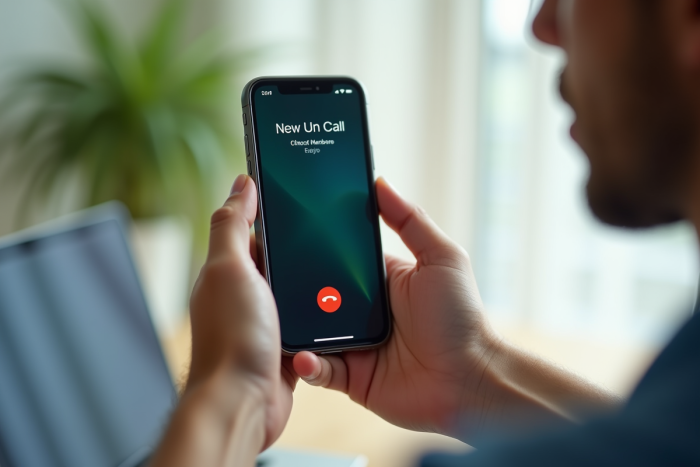
One might think that anonymity on the other end of the line belongs to the past, yet every day, thousands of French people find themselves facing unknown numbers that appear on their screens. The law protects privacy by prohibiting access to a comprehensive reverse directory, but this does not prevent the proliferation of alternative services. Some rely on public data, while others depend on active user participation. Hidden or premium-rate numbers continue to evade detection, while others leave behind digital traces, analyzed by specialized platforms. Digital tools and filtering applications have never been more numerous, but their use comes with legal safeguards that must be strictly adhered to.
Unknown Calls: Overview of Solutions to Identify a Number
The proliferation of unknown calls is increasingly prompting users to want to uncover the mystery behind a phone number. The experience has become commonplace: the phone rings, no name is displayed, and uncertainty takes hold. In the face of this doubt, identifying the caller becomes a necessity. Several methods exist to try to discover who is behind these famous unknown numbers.
Modern phone applications already offer some effective tools: by checking your call log, it is often enough to click on the suspicious number and explore the options provided. Sometimes, a simple search can establish a link with a saved contact or a business already present in your data.
For those who wish to go further, collaborative databases represent an interesting alternative. On these platforms, users share their feedback on incoming calls deemed suspicious or unwanted, thus facilitating the identification of certain correspondents.
Among the most consulted solutions, the reverse directory holds a prominent place. This service offers the possibility of finding the owner of a number simply based on its display. For those who wish to dig deeper, it is enough to consult the reverse directory (Free reverse directory mobile: Find out who called you – APWN), guaranteeing reliable information about the origin of received calls.
Users of Android or any other modern smartphone also have practical filtering options to block unwanted calls. A quick setup allows you to limit these nuisances while keeping track of unknown numbers if needed.

What to Know Before Searching: Legal Aspects, Limits, and Tips for Protection
Before launching any search to identify an unknown call, it is better to understand the legal framework and the limits that should not be crossed. French and European legislation strictly regulates the handling of personal data. Any attempt to obtain information about the owner of a phone number must comply with GDPR. Crossing this line exposes one to legal consequences, even if the intention is to protect oneself.
The famous red list remains an effective barrier: numbers listed there benefit from enhanced confidentiality. As for private or masked numbers, they generally evade any attempt at classic identification. No tool, even the most sophisticated, guarantees certain identification in these cases.
Some unscrupulous or poorly secured sites offer dubious databases. To avoid unpleasant surprises such as data theft or spam emergence, it is better to choose sources that have proven themselves. Most smartphones also include settings to block unwanted calls: on Android, simply go to the “incoming calls” section and activate filtering or silent mode for silent unknown calls.
To enhance your protection, here are some reflexes to adopt:
- In case of an unwanted call, report it to the relevant authorities via official platforms dedicated to combating spam.
- Also consider using the number blocking options integrated into your phone to better manage your incoming calls.
Staying vigilant is often the best defense. A few simple gestures and suitable tools are enough to significantly reduce your exposure to unwanted calls. The phone has not said its last word, but you now have control over the line.