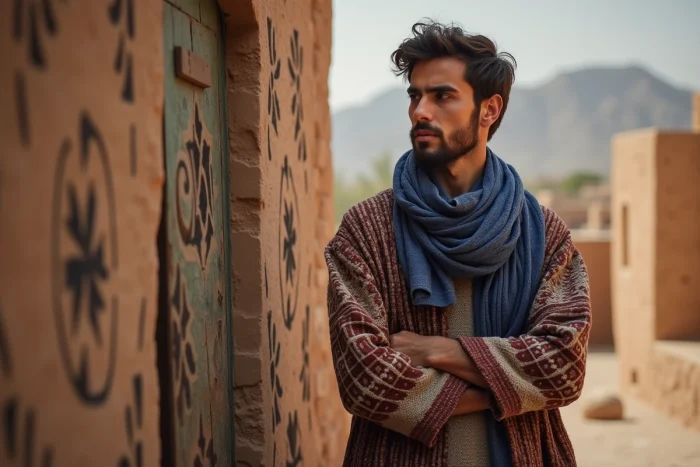
Sidjil does not appear in any official register, absent from the standardized lists of Berber names. However, this name circulates quietly in certain family circles, passed down away from administrative or religious rules.
Its use remains confined to specific regions, often off the public radar. Its rarity intrigues, raises questions, and highlights the logics that frame the choice of names in North African societies.
Sidjil: a Berber name that intrigues with its rarity and history
No need to be listed on an official register to withstand the test of time. Sidjil proves that the existence of a name sometimes plays out far from the gaze of institutions. Some adapt the spelling or pronunciation according to contexts. Here “Sidji,” there a modified version to avoid administrative refusals, but the essence remains the same: this fidelity to family transmission requires no validation. Sidjil does not assert itself; it is preserved, simply carried by the attachment of a lineage to its own narrative.
In seeking to uncover the origin of the name sidjil in Berber, one realizes that the task will not be easy: no trace in specialized dictionaries, no certainty etched in stone. Hypotheses abound: remnants of a pre-Islamic background, memories of a forgotten linguistic blend, or a simple tenacious heritage from one village to another. Nothing is settled, and that is where Sidjil fascinates even more: it asserts its uniqueness by escaping any appropriation.
Where does Sidjil come from? Origins, etymology, and traces in Amazigh culture
Never listed in works on the Tamazight language, nor recognized in civil status, Sidjil owes everything to oral transmission. To properly situate Sidjil, one only needs to contrast its discretion with the brilliance of some other Amazigh names, now famous, even proudly borne throughout the Maghreb.
Here are some examples that illustrate this Berber diversity and make the difference in fate evident:
- Massinissa: this name resonates as a historical symbol, associated with authority and the memory of Numidia.
- Idir: it evokes duration, endurance, the wish for a long and peaceful existence.
- Anir: it illuminates collective identity, evoking clarity and kindness.
- Aksil: a figure of a rebel leader from the 7th century, it evokes autonomy and defiance.
Sidjil, on the other hand, claims nothing in the public sphere. It lives in family memory, protected from overexposure and catalog logic. This deliberate, almost silent rarity questions our relationship with lineage and identity normalization.
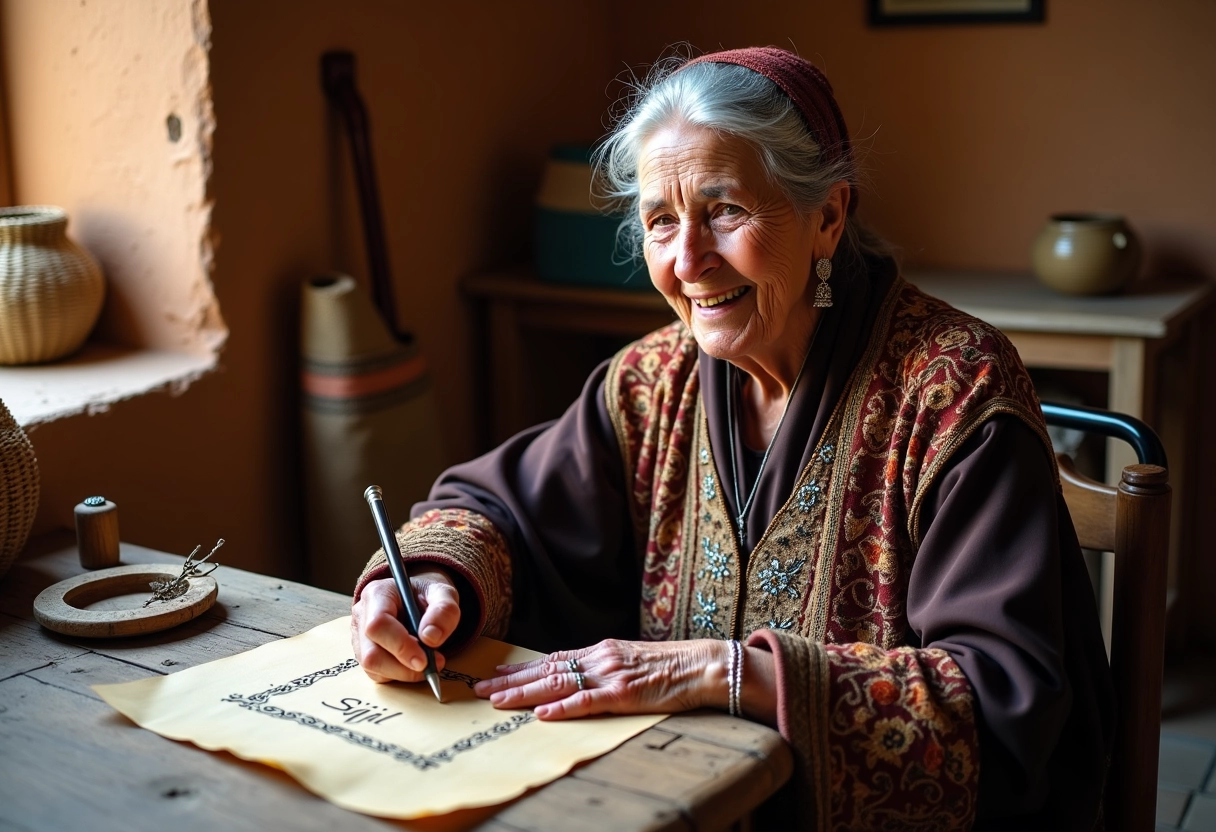
What Sidjil reveals about Amazigh identity and memory today
Choosing a Tamazight name is never done lightly: behind this gesture lies a whole history of gentle resistance to administrative uniformity. Sidjil, so discreet that it sometimes has to hide under an adapted spelling on documents, embodies this living thread between generations. It is not shouted from the rooftops, but it is kept, against all odds.
For years, giving an Amazigh name meant defying the taboo, especially in Algeria or Morocco, where the lists kept the door closed. Now, some names are gradually regaining their place. But Sidjil persists outside the boxes, faithful to its own trajectory. Its existence, tenuous yet stubborn, reminds us that no decree, no administrative grid, can fully stifle intimate memory: it is transmitted, sometimes under the radar, and asks for no one’s permission.