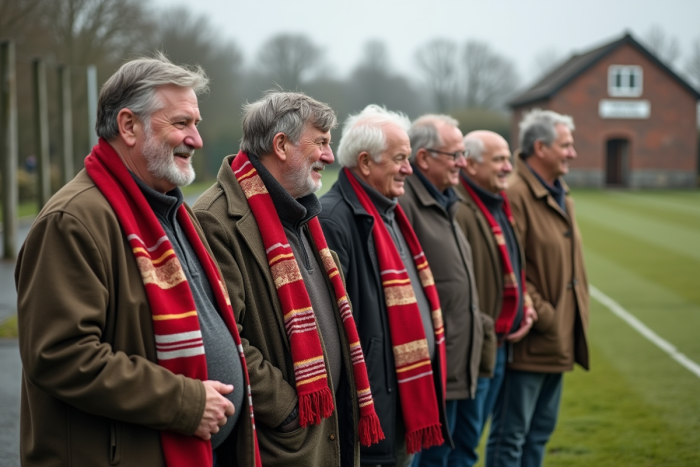
The French Football Federation records only a few hundred clubs on its official lists, while more than 15,000 sports associations claim their place in the history of the round ball. Regulations have long locked the door of professional divisions to amateur teams, regardless of their track record or level. Despite reforms, despite some forgotten pages and even erased titles, there remains a particular fervor in the life of rooted clubs. League movements, merger stories, nothing really dissipates the flavor of old derbies or the memory of generations. These local rivalries, these anecdotes that no national ranking tells, are the fuel of football off the media radar.
Why do regional clubs carry the memory and pride of hexagonal football?
From the North to the Pyrenees, from the Atlantic to the Eastern borders, each regional club extends a collective adventure woven by the passion of supporters, the smiles of children, and the energy of volunteers. Brittany, Burgundy, Alsace-Lorraine, and so many other lands see the seasons unfold, punctuated by exploits, hopes, and sometimes defeats that mark as much as a victory. Far from the cameras, the memory of football is invented through loyalty. A stunning match, an unexpected promotion, the echo of a decisive goal: so many moments that bond the community and write the legend. A fully-fledged member of the social fabric, the regional club goes well beyond sport. It welcomes, it integrates, it sharpens the ambition of young people who dream while treading the local pitch. This melting pot of identities shapes the region, nourishes collective pride, and transmits, through the color of the jersey, a legacy passed down tirelessly. The striking example of the AJA1905 speaks volumes: tenacious traditions, commitment that withstands the test of time, an almost visceral attachment to the community. Its story tells of the power of a local club to nourish the memory of an entire territory and sometimes to insert itself into the national narrative. Here, football does not stop at the edge of the field. It spreads through the streets, weaves bonds between generations, fuels conversations on market days. The struggles, the small victories, the hard knocks: all of this tells a common dream, kept alive by a solidarity that trends do not sweep away.
Legends, exploits, and transmitted knowledge: at the root of local passion
The strength of regional clubs lies in this narrative shaped by the years. The legend continues to spread through word of mouth, showcases filled with trophies, and snapshots of glorious teams. The archives thicken, but it is especially around the table or at the refreshment stand, through the exchanged memories after matches, that the memory circulates. Intense finals, hard-fought access to higher divisions, or even those relegations experienced as a real setback: everything imprints in the minds.
To grasp the extent of this wealth, a few examples speak for themselves:
- The title won against all odds, transforming an ordinary season into a collective epic.
- The story of a champions league final, catalyzing the enthusiasm of an entire territory.
- The historic captain who became a true emblem, a source of pride for all.
At the heart of these memories, key figures mark the landscape: Charles Simon, the first builder of associative football; Jules Rimet, visionary of the World Cup. Priests, Catholic leaders, members of the Saint-Martin Community, all contributed to spreading football to the smallest steeple, not without debates on secularism. Today, the rise of women’s teams and the emergence of new profiles prove that history remains in motion. All of this would be in vain without the strength of transmission. The younger generation appropriates the exploits of the elders, educators revive past epics, families gather every weekend at the edge of the field. This blend of memories, learning, and loyalty composes a strong and vibrant identity. Here, regional football is never static: it continues to be written, every day, in the eyes of those who bring it to life and in the enthusiasm of those who dream of it.