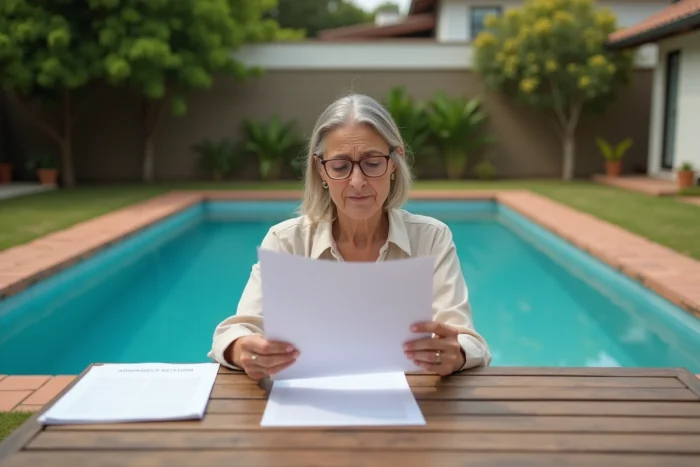
An in-ground or semi-in-ground pool constitutes an ancillary construction for tax purposes. As such, it modifies the cadastral rental value of the property and leads to a reassessment of the property tax. Before starting a project, it is better to understand precisely how the tax authorities incorporate a pool into the calculation of local taxes.
Cadastral rental value and pool: the calculation mechanism
Property tax is based on the cadastral rental value of the property, which is the theoretical annual rent that the housing could generate. When a fixed pool is added to the property, the tax administration recalculates this value taking into account the surface area of the pool and the applicable municipal rate.
Each municipality applies its own rate per square meter. The final amount therefore depends as much on the size of the pool as on the local tax policy. Two owners with identical pools, but in different municipalities, will not experience the same increase.
To fully understand the impact of the pool on property tax, it is important to remember that the calculation combines the new rental value, the annual revaluation coefficient set by the State, and the rates voted by the community.
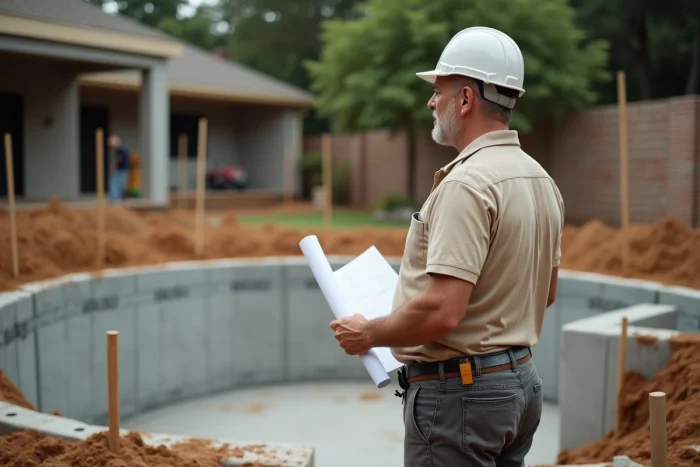
Development tax on a pool: a distinct cost often confused
The development tax is a one-time tax, paid only once after construction. It should not be confused with property tax, which is annual. For pools, the development tax uses a flat rate per square meter, re-evaluated each year by ministerial decree.
This flat rate is then multiplied by the surface area of the pool, and then by the rates set by the municipality and the department. The proceeds from this tax are distributed between these two local authorities.
The confusion between development tax and property tax leads some owners to underestimate the total tax cost of a pool. The former represents an initial investment, while the latter is a recurring additional cost each year.
Pool declaration to the tax authorities: the deadline and risks
The construction of a pool must be declared to the tax authorities within 90 days following the completion of the work. The relevant form is model IL (declaration of change in consistency or use), available from the public finance center or online.
This declaration is independent of the prior declaration of work submitted to the town hall before the project. The two processes fall under different administrations and serve distinct purposes.
What the town hall declaration covers
- The urban planning compliance of the project (location, distances, PLU rules)
- Compliance with safety standards (barriers, alarms, covers)
- Obtaining authorization before starting work (prior declaration for pools over 10 m², building permit for over 100 m² or with a shelter exceeding a certain height)
What the tax declaration covers
- Updating the cadastral rental value of the property
- Calculating the new tax base for property tax
- Potential triggering of a temporary two-year exemption
Forgetting or delaying the tax declaration exposes the owner to penalties. In recent years, the DGFiP has been using artificial intelligence detection tools, developed from aerial images, to identify undeclared pools. This program, called “Innovative Property,” initially targeted pools before being extended to garden sheds and pergolas.
Temporary exemption from property tax for a new pool
A declared pool within the deadline may benefit from a two-year exemption from property tax starting from January 1 following the completion of construction. This exemption applies to both the municipal and departmental shares, unless otherwise decided by the community.
The exemption only concerns property tax. It does not apply to the development tax, which remains fully due.
To benefit from this, the declaration within the 90-day deadline is a necessary condition. An owner who declares their pool late loses the right to this exemption, in addition to facing penalties.
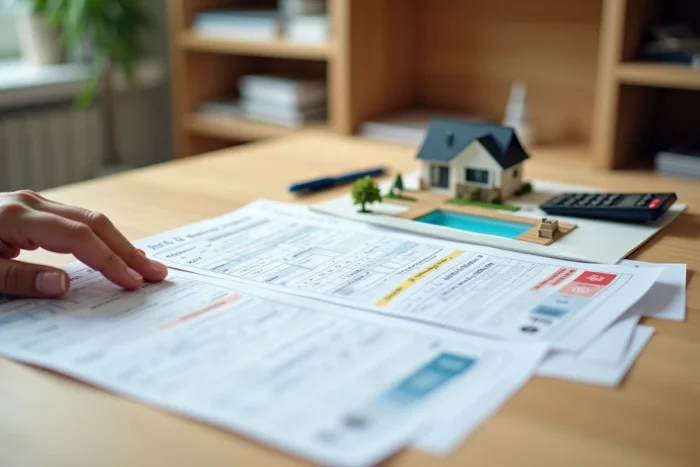
Above-ground pools, natural pools, and shelters: the tricky cases
Not all pools are taxed the same way. The determining criterion is the fixity to the ground and the masonry nature of the structure. An above-ground pool, placed without a foundation and removable, does not fall under the scope of property tax or development tax.
Natural pools, on the other hand, pose a specific problem. A swimming basin presented as “landscaped” can be reclassified as a built pool as soon as it includes fixed elements: concrete slab, masonry coping, integrated stairs, permanent technical room. It is the nature of the structure (its fixity) that prevails, not its decorative use or aesthetics.
A closed and covered pool shelter, whose surface exceeds 5 m² with sufficient ceiling height, is also subject to the development tax. This additional cost is rarely anticipated in the initial project budget.
The most common tax trap remains the semi-in-ground pool with a partially masonry structure. Even if it seems “light,” its anchoring to the ground is enough to make it taxable. Before choosing a type of pool, checking its tax status with the public finance center can avoid unpleasant surprises when receiving the first tax notice.