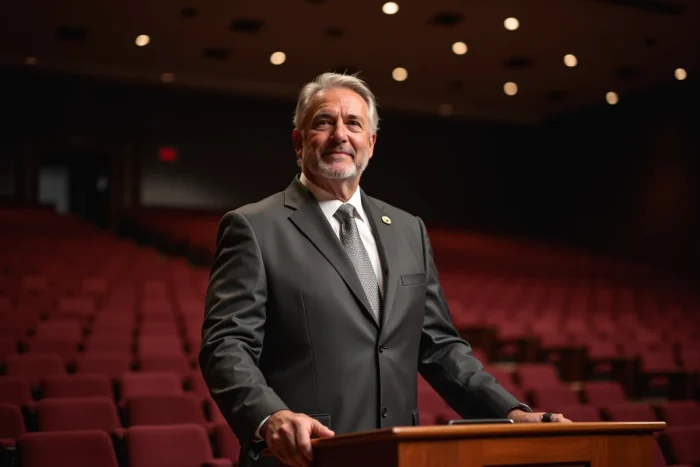
Joel Osteen’s fortune is regularly estimated at $100 million. The pastor of Lakewood Church in Houston lives in a villa valued at $10.5 million, acquired around 2010 through the profits of his real estate investments. These amounts, which he has publicly commented on, raise a broader question: how is wealth distributed among the wealthiest American pastors, and where do these incomes actually come from?
Estimated fortunes of the most publicized American pastors
The available data places Joel Osteen among a small group of preachers whose wealth far exceeds that of most business leaders. A numerical overview that, in itself, already tells a lot about the economy of preaching in the United States, with Joel Osteen’s fortune detailed among other notable profiles.
| Pastor | Estimated Fortune | Main Sources of Income |
|---|---|---|
| Joel Osteen | $100 million | Books, speaking engagements, real estate investments |
| Kenneth Copeland | Several hundred million $ | Television ministry, publishing, private aviation |
| Pat Robertson | Considerable wealth | Media (CBN), diversified investments |
| T.D. Jakes | High wealth | Publishing, film, speaking engagements |
| Creflo Dollar | High wealth | Ministry, publishing, donations |
The disparities between these fortunes reflect very different economic models. Joel Osteen derives a significant portion of his income from publishing (notably his book Your Best Life Now) and fees earned from his speaking engagements, after 26 years at the helm of Lakewood Church, a position he describes as voluntary.

Sources of income for mega-pastors: well beyond the tithe
The image of the pastor living off the donations of his followers no longer corresponds to the economic reality of large American ministries. Income has diversified massively over the past two decades, to the point that Sunday preaching sometimes represents only a marginal fraction of financial inflows.
Joel Osteen reiterated this during a podcast in April 2026: he claims that his wealth comes from book sales and his speaking fees, not directly from Lakewood Church. This distinction is strategic.
- Publishing (books, personal development programs) generates recurring royalties over decades, independent of the church
- Paid speaking engagements, often billed to private organizers, constitute a revenue stream parallel to the ministry
- Real estate investments allow for building a personal wealth distinct from ecclesiastical assets
- Streaming and digital content open up new large-scale monetization sources
This diversification makes the wealth of these pastors difficult to assess from the outside. Personal income and church resources often overlap, fueling criticism about the indirect benefits these religious leaders enjoy.
U.S. Senate inquiries and pressure for financial transparency
Between 2007 and 2011, Senator Chuck Grassley conducted an investigation into the lifestyles of several American televangelists. This inquiry led to recommendations on governance and compensation for religious leaders, specifically targeting the use of private jets, villas, and other properties financed by the donations of followers.
Several ministries revised their compensation practices and legal structures following this work. The stated goal: to make personal enrichment that is not justified more difficult compared to previous decades.
Since 2022, the pressure has intensified further. Journalistic investigations, notably those by ProPublica and The Roys Report, regularly document the finances of mega-churches. Donor campaigns are now calling for independent audits. The trend towards third-party audits is changing how these fortunes are documented and publicly contested.

Tax status of American churches: a loosely regulated framework
Churches in the United States benefit from tax exemptions without being required to publish their accounts like other non-profit organizations. This particular regime partly explains why wealth estimates remain approximate and subject to debate.
The Grassley inquiry did not lead to new binding legal obligations. The recommendations remained voluntary, and only a minority of ministries adopted enhanced transparency practices.
Prosperity gospel and personal wealth: the theological link
Joel Osteen embodies a specific theological current: the prosperity gospel, which associates financial success with divine blessing. This doctrine serves as a moral justification for the accumulation of wealth by the pastors who preach it.
Supporters of this approach praise Osteen’s transparency and his biblical vision of prosperity. His detractors see it as an instrumentalization of faith, pointing to the contradiction between a spiritual message and an ostentatious lifestyle: a $10.5 million villa financed by often modest followers.
- Material prosperity is presented as a sign of divine favor, legitimizing the pastor’s wealth in the eyes of his community
- Critics label this doctrine as heretical, arguing that it distorts the original evangelical message
- The resulting economic model creates a loop: the richer the pastor, the more he is perceived as blessed, the more he attracts followers and donations
In April 2026, Joel Osteen responded to rumors about yachts and private jets by stating that people “make things up” about his wealth. This defensive stance comes in a context where the public documentation of these fortunes is more precise than it has ever been, thanks to the work of investigative media and the growing pressure from the donors themselves.
The wealth of the richest American pastors relies on well-identified economic mechanisms: publishing, speaking engagements, investments, tax benefits. The question is no longer how much they possess, but whether the American regulatory framework will eventually require the same transparency imposed on other non-profit organizations.