
Diogenes syndrome combines compulsive hoarding, severe neglect of personal and domestic hygiene, and social isolation. This behavioral disorder mainly affects older people, but can also affect younger adults with cognitive impairment. Identifying the situation early makes it possible to contact the right professionals before the person’s home or health deteriorates irreversibly.
Diogenes syndrome and hoarding disorder: two distinct conditions
A cluttered home is not enough to make a diagnosis. Hoarding disorder refers to the excessive accumulation of objects, often with no practical value, to the point where the home becomes difficult to live in. It is a common symptom of Diogenes syndrome, but the syndrome is more than just clutter.
Diogenes syndrome is characterized by a combination of several factors: refusal of care and outside help, neglect of personal hygiene, voluntary social isolation and, in most cases, a complete lack of awareness of the problem. Someone who collects newspapers without neglecting their health or hygiene falls under a different clinical category.
Understanding Diogenes syndrome and its signs means looking beyond the visible disorder and assessing the person’s overall condition, their relationships with others and their ability to care for themselves.
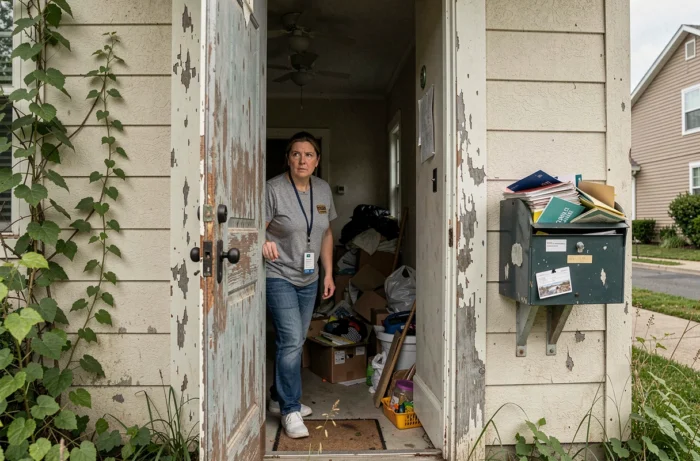
Signs of Diogenes syndrome: warning signs at home and in a person’s behavior
The first signs are rarely dramatic. They emerge gradually and reinforce one another, making them difficult for family and friends to recognize.
Signs related to the home and personal hygiene
- Accumulation of assorted objects (packaging, worn-out clothes, food waste) that makes some rooms inaccessible or unusable.
- Persistent odors noticeable from the landing or garden, sometimes accompanied by pests (insects, rodents).
- Marked neglect of personal hygiene: wearing dirty clothes continuously, lack of basic dental or medical care, visible weight loss.
- Damage to the property caused by damp, leaks or a lack of routine maintenance.
Behavioral and social signs
Refusing visitors is a strong indicator. The person refuses to open the door, cancels medical appointments and rejects any offer of help. This social withdrawal differs from simple shyness in that it is systematic and increasingly pronounced.
Eating habits become erratic: skipped meals, eating expired food without taking precautions, and no regular grocery shopping. In older people, confusion or disorientation about time may also be present, pointing to possible underlying cognitive impairment.
One point is worth emphasizing: the person concerned almost never asks for help. The alert usually comes from someone else, such as a neighbor, postal worker, relative or home-care professional.
Underlying conditions associated with Diogenes syndrome: why medical diagnosis is essential
Diogenes syndrome is not a standalone psychiatric diagnosis. It describes a set of behaviors that can result from very different conditions, including Alzheimer’s disease, psychiatric disorders (severe depression, obsessive-compulsive disorder), the effects of a stroke or chronic alcoholism.
A traumatic life event (bereavement, separation, job loss) can also trigger a decline in someone who was previously independent. Prolonged isolation worsens every risk factor and accelerates the deterioration of living conditions.
This is why trying to diagnose the condition yourself is counterproductive. An unsanitary home and refusal of help are observable facts, not a diagnosis. Only a comprehensive medical assessment involving a doctor, psychiatrist and sometimes a social worker can determine the cause and tailor the support provided.
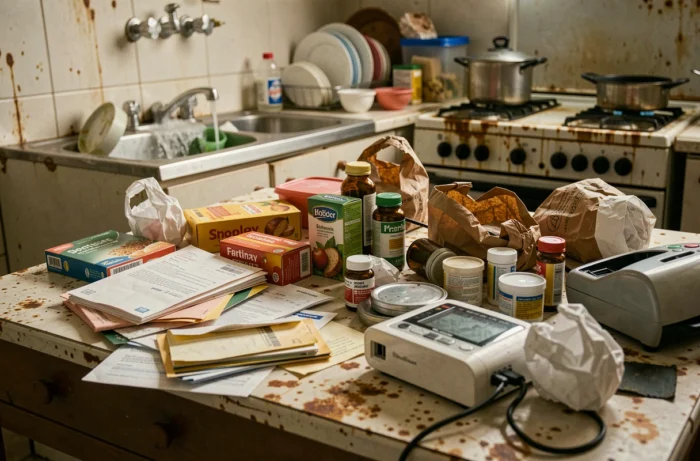
First steps when faced with a Diogenes syndrome situation: who to contact and in what order
A common mistake is to try to solve the problem by clearing out the home. Removing someone’s belongings without their consent, or without a legal basis to do so, can increase their withdrawal and damage their relationships with those around them. The accumulated objects serve a psychological purpose for the person, even if that purpose is not apparent to an outside observer.
Choose the first point of contact based on the observed risk
The right person to contact first depends on what has actually been observed.
- The primary care doctor should be the first point of contact when there are concerns about the person’s health (weight loss, confusion, untreated injuries).
- The CCAS (local social services center) or the department’s social services can assess the person’s isolation and support needs and, if necessary, coordinate a home visit.
- The town hall or its environmental health department can be contacted if the home poses a risk to neighbors (pests, odors, fire risk, leaks).
- In an immediate emergency (collapse, fall, confirmed fire risk), contact the emergency services without delay.
Describe facts, not a diagnosis
A useful report is based on concrete observations: visible pests, persistent odors, prolonged lack of response, or worrying physical condition. Sharing these factual details with the right contact helps move the case forward more effectively than applying a label as a non-professional.
Support should be gradual and coordinated. Forcing entry into a home or imposing a clean-up without psychological support leads, in most documented cases, to a rapid relapse. The initial goal is to re-establish contact, offer medical follow-up and assess the person’s capacity to consent to care.
Diogenes syndrome takes time to develop and takes time to address. The first helpful step is neither cleaning nor judgment, but contacting the right professional and sharing precise facts.