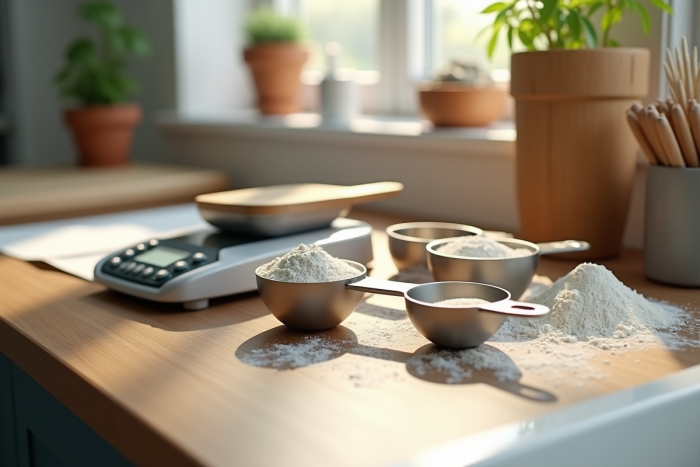
A French tablespoon does not contain the same amount as an American tablespoon: 15 ml versus 14.79 ml. Some cookbooks multiply units without warning, switching from grams to ounces and then to cups. The margins of error accumulate quickly, turning a cake into a mathematical puzzle.
The lack of international standardization requires constant gymnastics to adapt quantities. Converting without losing precision becomes essential, especially when the result depends on a fragile balance between ingredients.
Why measurement units play a key role in the success of your recipes
Cooking is not just about following a list of ingredients to the letter. It’s about juggling measurements that sometimes change their face without warning. A centiliter, a milliliter, an ounce, or a gram: these units can disrupt a recipe if misinterpreted. Take the Margherita pizza dough. It is nothing approximative: too much water and the dough sticks, not enough and it tears. Add a little more yeast or a pinch too much salt and the magic works differently. The success of a dish is born from precise, rigorous, almost mathematical dosing.
Recipes gathered from around the world are a real training ground. An Italian book mentions the deciliter, while an English site talks about cups, ounces, or pounds. To manage, it quickly becomes essential to know how to convert a liter to grams, without getting lost in repeated conversions. The experience takes on another dimension when navigating between cups, mustard glasses, tablespoons, and kilograms. This transition from one system to another enriches practice, encourages questioning, adjustment, and understanding what each quantity implies for the final result.
Nothing is improvised. A pinch too much salt, a level or heaped tablespoon of sugar, and the balance wavers. Professionals have known for a long time: respecting measurements guarantees the quality, consistency, and reproducibility of a dish. From mozzarella to basil, each component demands its fair share, so that the recipe remains true to the original project and can be shared without unpleasant surprises.
Here are some useful benchmarks to keep in mind when navigating between different units:
- 1 tablespoon = 15 ml = 3 teaspoons
- 1 cup = 240 ml (liquid), about 120 g (dry)
- 1 ounce = 28 g, 1 pound = 454 g
- 1 mustard glass = 20 cl = 100 g of flour
For those who want to go further, converting liters to grams quickly becomes a must. It allows for greater efficiency and avoids the unpleasant surprises that can sometimes spoil all the hard work in the kitchen. Cultivating precision is much more than a technical question: it is what elevates a dish from approximation to mastery.
Practical charts and clever tips for converting without mistakes
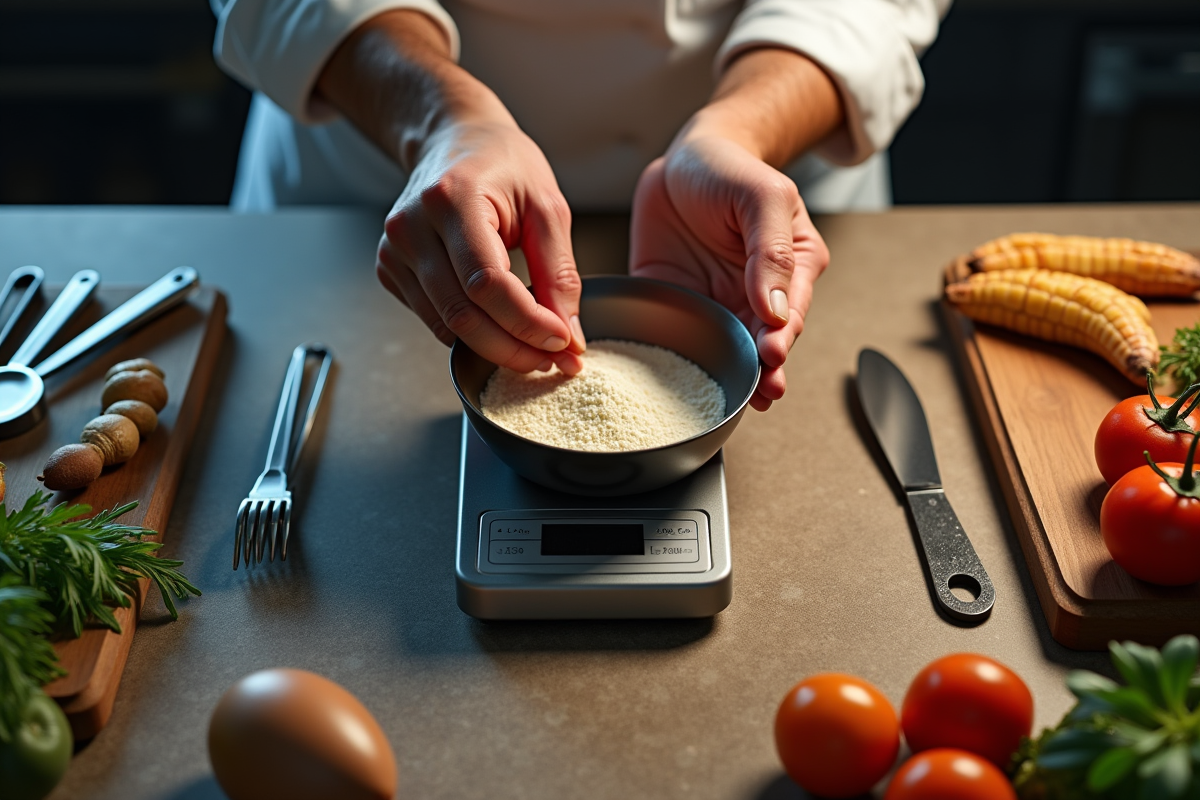
Converting measurements in cooking is akin to a discipline in its own right. When moving from grams to milliliters, from centiliters to mustard glasses, each ingredient calls for vigilance. To limit discrepancies, nothing beats having a conversion chart at hand, a reliable measuring spoon, or a graduated measuring cup. Experience confirms it: accurately measuring water, milk, oil, as well as flour, rice, or sugar avoids many mistakes and failed dishes.
| Unit | Equivalence | Ingredient (weight/volume) |
|---|---|---|
| 1 tablespoon | 15 ml | 10 g of sugar, salt, flour |
| 1 cup | 240 ml | 120 g of flour |
| 1 mustard glass | 20 cl | 100 g of flour, 160 g of rice |
| 1 ounce | 28 g | |
| 1 pound | 454 g |
For even more reliability, mobile apps or a dedicated kitchen calculator can make a difference. An electronic scale refines the weight to the nearest gram, while a chart displayed on the fridge reminds you of the most commonly used equivalents: 1 cl equals 10 ml, 1 liter equals 1000 ml, 1 kilogram equals 1000 g. To convert from centiliters to milliliters, simply multiply by 10; to convert from milliliters to liters, divide by 1000.
Ultimately, mastering conversions and maintaining precise actions allows you to turn every recipe into a success. Cooking is also about this intelligence of adjustment, this sense of detail that makes all the difference at serving time.