In France, fewer than one in five students from an artistic preparatory class ultimately join a design school. Entrance exams show very variable success rates, sometimes below 10%. However, some programs integrate creative workshops from the first year, while others prioritize theory and academic drawing.
Why motivation in drawing makes all the difference, far beyond the choice between art prep and design school
Choosing between art prep and design school is never just a rational calculation. It is often a bet on oneself, where energy, the ability to question oneself, and tenacity play a decisive role. Each person’s trajectory is built much more on endurance and adaptability than on a report card or “innate” talent.
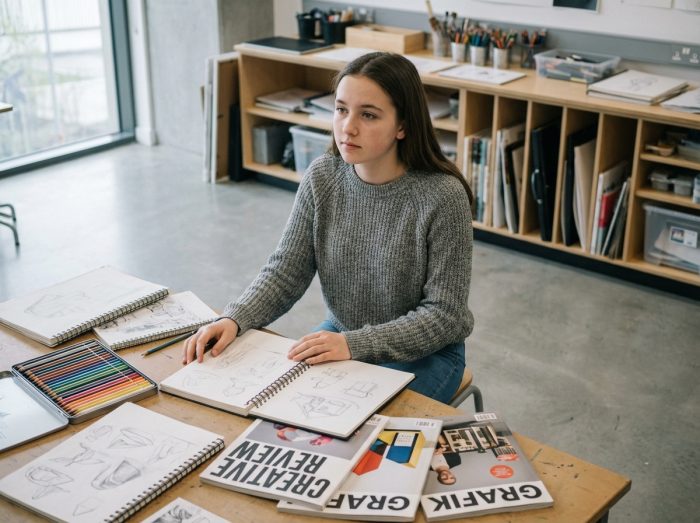
The ability to persevere in learning to draw weighs more heavily than the chosen path. Many, attracted by the aura of design schools, quickly discover that progress is a long-term game: practicing sketching every day, opening up to new mediums, accepting to start from scratch. Regardless of the structure, no training guarantees success without total commitment.
Motivation becomes the true driving force. The students who move forward are those who accept doubt, exploration, and failure. Workshops, collective critiques, imposed projects, all of this is just a springboard. What forges progress is this clear-eyed view of one’s own drawings, this desire to understand, correct, and start over, stubbornly.
In this comparison between art prep and design school, the difference quickly deepens between those who multiply experiences, explore relentlessly, and those who remain superficial. Whether in Paris, Bordeaux, or Lyon, the context does not change this requirement.
Training, projects, curiosity: three words that mark the path. Drawing is exposing oneself, making every awkwardness a stepping stone to go further. Style does not emerge all at once: it asserts itself, stroke by stroke, failure after attempt.
Asking the right questions: how to maintain the desire to progress daily?
The energy to continue, to refine one’s line, to shape one’s style, does not arise from an injunction. It is cultivated every day. Motivation and personal work then become the true pillars, regardless of the choice between art prep and design school. The real challenge: to preserve this curiosity, this wonder, even when exercises repeat or rigor invades every project.
Some levers to nourish this dynamic:
Here are concrete ideas to maintain motivation and keep the momentum going, day after day:
- Artistic experimentation: Step out of your comfort zone, test new techniques, mix mediums. It is often in failures that a strong idea emerges, a touch that distinguishes one work from another.
- Dialogue with teachers: Seek feedback, dare to confront ideas, strive to understand the areas for improvement. These exchanges sharpen the eye and unlock blockages.
- Work outside of classes: Start a personal project, build a moodboard, revisit art history, or dive into concept art. Every detour broadens the palette, every experience nourishes creativity.
To progress, one must weave a connection between projects and daily life. A graphic style is not forged in solitude, but through iteration: morning sketches, research notebooks, shared projects, continuous exchanges. Curiosity, discreet yet powerful, infuses energy into every gesture and brings forth new ideas.
Concrete examples and tips to keep the flame alive, even in moments of doubt
Going through a year of art prep or starting a bachelor’s in graphic design comes with its share of obstacles. Periods of doubt, fatigue, and waning inspiration often arise unexpectedly. In the face of these lows, the key question: how to rekindle motivation when desire falters or the project stagnates?
Daily experimentation proves to be a true engine. As soon as a blockage arises, nothing beats these improvised micro-workshops: a poster on an unexpected theme, a quick animation based on a mundane object, a sketch stolen on the subway or at a café. Simple, repeated gestures that refresh the perspective and enrich the portfolio without pressure.
The sketchbook then becomes a valuable tool. It records ideas, sketches, color harmonies encountered randomly during a walk. It is the common thread that reveals the evolution of style, hesitations, breakthroughs. Many teachers encourage documenting every step of a graphic design project, annotating choices, and keeping track of inspirations and turns.
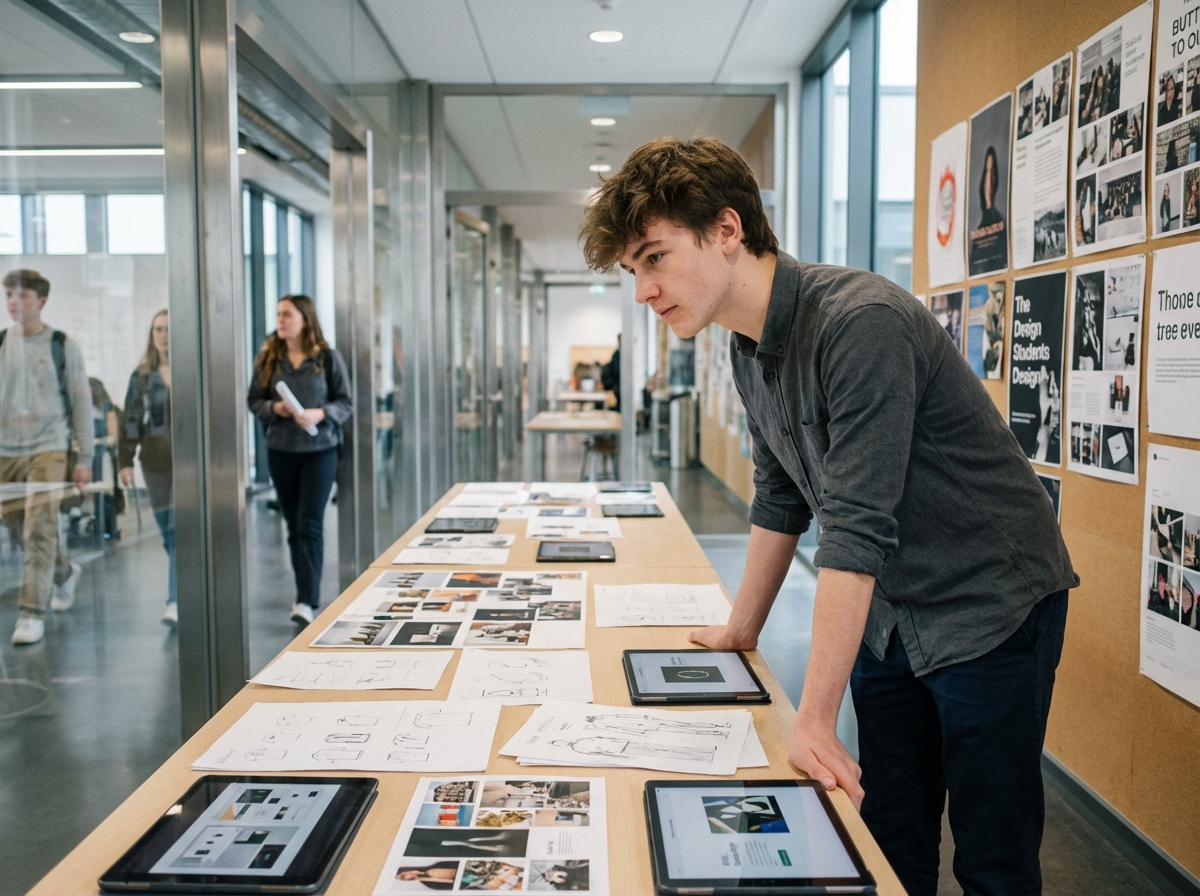
Creating connections also changes the game. Participating in motion design workshops, joining a collective, launching a collaborative project around visual communication or animation: these shared experiences open new horizons and revive energy, especially in the first year.
Finally, taking care of one’s artistic portfolio makes all the difference. Varying references, showcasing the diversity of projects, including unexpected works. The motivation letter, far from formulaic expressions, can reveal a sincere journey, a genuine curiosity for drawing, graphic design, or even video games. This touch of authenticity captures the attention of juries and nurtures lasting creativity.
In the end, one does not remember the name of a school or a diploma, but the momentum with which one charts their path, despite doubts and detours. The flame feeds on trials, encounters, and a stubborn will to progress, stroke by stroke, project by project.